Chlorosulfonic Acid: Uses, Properties and Industrial Applications
Chlorosulphonic Acid is one of the most important industrial chemicals used in the manufacturing of specialty chemicals, dyes, pharmaceuticals, agrochemicals, and detergents. Due to its strong sulfonating and chlorinating properties, it plays a significant role in various chemical processes. Industries rely on this chemical to produce high-quality products that require precise chemical reactions and consistent performance.
What is Chlorosulphonic Acid?
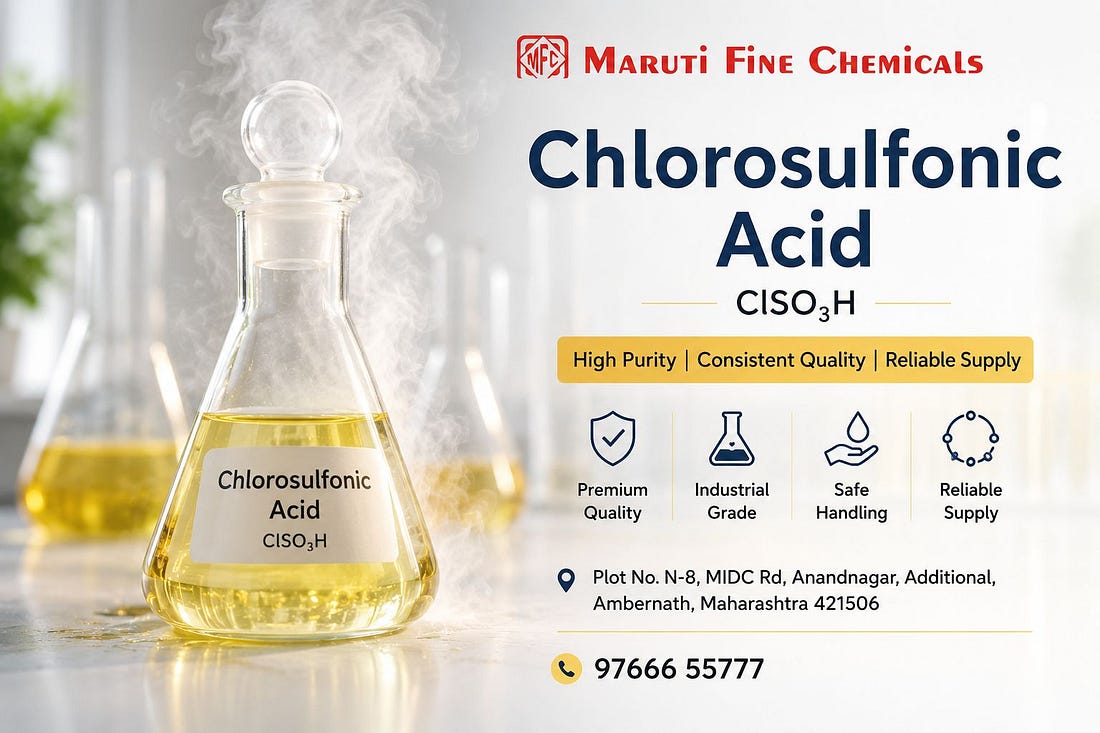
Chlorosulphonic is a highly reactive, colorless to pale yellow liquid with a strong pungent odor. It is an inorganic compound with the chemical formula HSO₃Cl. The chemical reacts vigorously with water, releasing hydrogen chloride gas and heat. Because of its highly corrosive nature, it must be handled with proper safety precautions.
Key Properties of Chlorosulphonic Acid
Understanding the physical and chemical properties of this compound helps industries use it effectively and safely.
Physical Properties
- Appearance: Colorless to pale yellow liquid
- Chemical Formula: HSO₃Cl
- Molecular Weight: 116.52 g/mol
- Strong pungent odor
- Highly corrosive
- Reacts violently with water
Chemical Properties
- Strong sulfonating agent
- Strong chlorinating agent
- Highly reactive with moisture
- Produces hydrochloric acid and sulfuric acid derivatives during reactions
- Excellent for introducing sulfonic groups into organic compounds
Manufacturing Process
The production of Acid generally involves the reaction of sulfur trioxide with hydrogen chloride under controlled conditions. The process requires specialized equipment due to the highly reactive nature of the chemical.
Chemical manufacturers maintain strict quality control procedures to ensure purity, consistency, and safe storage. Reliable suppliers such as Maruti Fine Chemicals focus on maintaining high-quality standards to meet industrial requirements.
Major Uses of Chlorosulphonic Acid
1. Production of Detergents and Surfactants
One of the largest applications of acid in the production of detergents and surfactants. The chemical is used to sulfonate organic compounds, creating ingredients that improve cleaning efficiency and foaming properties.
These surfactants are commonly used in:
- Household detergents
- Industrial cleaners
- Liquid soaps
- Personal care products
2. Pharmaceutical Manufacturing
The pharmaceutical industry utilizes Chlorosulfonic acid in the synthesis of various active pharmaceutical ingredients (APIs). Sulfonation reactions are critical in creating chemical intermediates used in medicines.
Its controlled reactivity helps manufacturers develop compounds with specific chemical structures required for pharmaceutical formulations.
3. Dye and Pigment Industry
The dye industry depends heavily on sulfonation chemistry. Chlorosulphonic helps produce dye intermediates that improve solubility and performance.
Applications include:
- Textile dyes
- Printing inks
- Industrial pigments
- Specialty colorants
The use of sulfonated compounds improves color stability and product performance.
4. Agrochemical Production
Modern agriculture relies on high-performance crop protection chemicals. Chlorosulfonic acid is widely used in the manufacture of herbicides, pesticides, and fungicides.
Many agrochemical intermediates require sulfonation during production, making this chemical a valuable raw material for the agricultural sector.
Industrial Applications of Chlorosulfonic Acid
Chemical Manufacturing
The chemical industry is the largest consumer of Chlorosulfonic. It serves as a key reagent in the synthesis of numerous specialty chemicals and intermediates.
Industries use it for:
- Sulfonation reactions
- Chlorination processes
- Intermediate production
- Specialty chemical manufacturing
Its versatility allows manufacturers to produce a wide range of industrial products efficiently.
Plastic and Polymer Industry
Certain polymers and specialty resins require sulfonated compounds during production. Sulfonation improves chemical resistance, conductivity, and performance characteristics.
This makes the chemical useful in advanced material manufacturing.
Textile Industry
The textile sector uses compounds produced through sulfonation to improve dye uptake and fabric treatment processes. Sulfonated intermediates help create durable and vibrant textile products.
Applications include:
- Fabric treatment chemicals
- Dye intermediates
- Specialty textile additives
Water Treatment Chemicals
Some water treatment products require sulfonated compounds to enhance performance. The chemical contributes to the production of specialty treatment formulations used in industrial water management systems.
Advantages of Using Chlorosulphonic
Industries prefer Chlorosulphonic Acid because of several benefits:
High Reactivity
Its strong sulfonating capability allows efficient chemical transformations, reducing production time and improving process efficiency.
Versatility
The compound can be used across multiple industries, including pharmaceuticals, detergents, dyes, agrochemicals, and specialty chemicals.
Consistent Performance
When sourced from reliable suppliers, the chemical provides predictable and repeatable reaction results, helping manufacturers maintain product quality.
Cost-Effective Manufacturing
Its effectiveness in chemical synthesis often reduces the number of processing steps required, improving overall manufacturing efficiency.
Safety and Handling Guidelines
Because of its highly corrosive nature, Chlorosulphonic Acid requires careful handling.
Personal Protective Equipment (PPE)
Operators should use:
- Chemical-resistant gloves
- Safety goggles
- Face shields
- Protective clothing
- Respiratory protection when required
Storage Requirements
The chemical should be stored:
- In dry, moisture-free environments
- In corrosion-resistant containers
- Away from water and incompatible materials
- In properly ventilated storage areas
Emergency Precautions
Facilities handling this chemical should maintain:
- Emergency showers
- Eye wash stations
- Spill containment systems
- Proper ventilation equipment
Employee training is also essential to ensure safe operations.
Choosing a Reliable Supplier
Selecting a trusted supplier is important for maintaining product quality and operational safety. Factors to consider include:
- Product purity
- Consistent quality standards
- Technical support
- Safe packaging
- Reliable delivery schedules
- Regulatory compliance
Maruti Fine Chemicals supplies high-quality industrial chemicals to meet the requirements of various manufacturing sectors. Consistent product quality and dependable service help industries maintain smooth production processes.
Future Demand and Market Growth
Demand for sulfonated products continues to increase globally. Growth in pharmaceuticals, agrochemicals, detergents, and specialty chemicals is driving the need for reliable raw materials.
As industrial production expands, Chlorosulphonic Acid is expected to remain a critical chemical for manufacturing advanced products. Innovations in chemical processing and specialty formulations will further support market growth in the coming years.
Frequently Asked Questions (FAQs)
1. What is Chlorosulphonic Acid used for?
It is mainly used for sulfonation and chlorination reactions in the production of detergents, pharmaceuticals, dyes, agrochemicals, and specialty chemicals.
2. Which industries use Chlorosulfonic acid?
Industries such as chemical manufacturing, pharmaceuticals, textiles, detergents, agrochemicals, and water treatment commonly use it.
3. Why is Acid important in detergent manufacturing?
It helps produce surfactants that improve cleaning performance, foaming properties, and overall detergent efficiency.
4. How should Chlorosulphonic Acid be stored?
It should be stored in moisture-free, corrosion-resistant containers away from water and incompatible materials.
Conclusion
Acid is a vital industrial chemical known for its powerful sulfonating and chlorinating properties. Its applications extend across detergents, pharmaceuticals, dyes, agrochemicals, textiles, and specialty chemical manufacturing. The compound enables efficient chemical synthesis and supports the production of numerous high-value products used worldwide.
With growing industrial demand, the importance of Chlorosulphonic Acid continues to increase. Businesses that prioritize quality, safety, and reliable sourcing can achieve better manufacturing results and operational efficiency. Maruti Fine Chemicals remains committed to supplying quality chemical solutions that support the evolving needs of modern industries.
contact now!!!!
visit here — https://www.indiamart.com/marutifine-chemicals/chlorosulfonic-acid.html


Comments
Post a Comment